

Benefits of a Built Microwave Oven Combo
Traditionally, microwaves take up a lot of countertop space. A built-in microwave oven combo allows you to reclaim the space while increasing storage space and workspace.
These units can be tucked into cabinets already in place for a custom installation. They're available in neutral finishes, such as our top value choice, stainless steel or white, to blend with other kitchen appliances.
Capacity
A built-in microwave oven gives you the convenience of a microwave to cook and heat pre-packaged food or leftovers, while also providing the flexibility of an oven wall for baking or roasting and broiling. A lot of models have an advanced oven cleaning system, as well as other useful features like quick preheat or air fry mode. The combination of microwave and oven capacity makes these wall ovens ideal for families that are busy.
Microwave ovens can be built directly into the cabinet and give your kitchen a more streamlined look and saving valuable counter space. They're available in a variety of finishes and sizes, so you can find the ideal one for your kitchen. Additionally, certain models have convection capabilities to provide even and faster cooking results. You can pick from a variety of microwave power ratings and sizes, as well as traditional oven capacities that vary according to your requirements.
Design
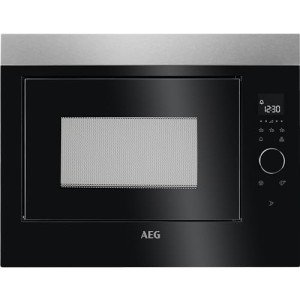
These microwaves for wall ovens are available in a wide selection of sizes and styles. Some even integrate into the cabinet or wall for an elegant look. These units are designed to make space in the kitchen and are an excellent alternative for homeowners who wish to streamline their cooking appliances. They also include various features that simplify baking, including automatic oven cleaning, quick preheat, and air fry mode.
A wall oven-microwave combination may be a good option for those who wish to create a modern look in their kitchen. But, it's more expensive than separate models. A combination appliance makes sense only if you are replacing an existing wall oven and you have a flexible budget. A range and freestanding microwavable is a better option if you want to save money. It is recommended to select one equipped with a powerful microwave and an oven that is traditional and has powerful fan convection. These features ensure that food is heated evenly and browned. Also, take into consideration the power of the microwave, which is measured in Watts per cubic inch (W/ci). A higher wattage is likely to heat and cook food faster.
Convection cooking
Convection ovens are an amazing feature to have in your kitchen. It helps your food cook more evenly by circulating hot air over the ingredients so you don't need to worry about cold spots appearing in your dish. This method of cooking also uses less electricity, saving you money on your electric bill.
Many homeowners believe that a microwave-microwave combo that has an integrated convection is the best solution because it will save space. This type of oven can be used for roasting and baking as well as for microwaving. It also has a large rectangular window that lets you observe your food cook.
If black built in microwave looking for a microwave that is capable of both convection cooking and traditional cooking, select one that has both a traditional setting and a defrost option. You can easily switch between the two depending on what you are cooking. Certain models include sensors that measure the amount of food and adjusts time and power automatically.
Certain dishes aren't suitable for microwave convection ovens, but you will find that it's a great option most of the time. Convection mode is ideal for roasting meats or vegetables because the dryer air helps caramelize and crisp up the exterior. It's also the best option for baking pastries and pies because it melts fat faster, helping to create more lift in the dough.
You'll need more frequent checks in the convection mode. Use lower dishes and pans to allow air to circulate. Avoid covering your dishes and pans with foil, as this prevents hot air from circulating. Check your food at about two-thirds or three-quarters of the way through the recommended cooking time to make sure it is cooked to your taste. This will ensure that your food is cooked correctly every time. If you don't have a convection microwave think about a wall oven-microwave combination instead.
Installation
A built microwave oven combo offers the convenience of a microwave and the capability of an oven in one appliance. The microwave portion can be used to cook leftovers and pre-packaged microwaveable meals while the traditional oven can be used for baking, roasting and broiling. They are available in various sizes, from small models suitable for small kitchens to larger models designed for large families and households that cook often. A lot of these appliances offer a ventilation system to remove smoke and cooking odors from the kitchen.
Microwave oven wall units are usually installed directly into cabinets, giving an integrated look. This reduces counter space and eliminates the necessity of walking back and back and forth between two separate appliances. Wall units are available in single-wall and double-wall styles. However, it is essential to verify the dimensions of the cabinet opening before purchasing a wall unit of this type. For instance, some models require 28 1/2 inches of width, and a recommended height of 17 5/8 inches. These measurements are important to ensure that the microwave oven fits properly and has adequate airflow.
If you're unable to set up your microwave combo on your own, think about hiring an electrician who is licensed to assist with the installation process. This will ensure that the appliance is placed correctly and that all electrical connections are secure. Before making any electrical connections, be sure to turn off the power supply to the junction box. Once you have completed the electrical connections, you can put on the cover for the junction box and secure it.
The first step in assembling your microwave is to assemble the spacer bar, if needed. The flange of the spacer with the bottom trim, and attach it using the 3/8 inch washer screws from the microwave filler kit. Then place the plastic washers in the correct position and attach them to the holes in the side mounting brackets. To fix the microwave oven to the cabinet, tighten and thread the screw with a 3/4 inch flathead.